
Article Body
If you are over 40 and thinking about buying a blood sugar supplement, the label matters more than the advertisement.
A sales page can sound exciting. A video can feel convincing. A bottle can look professional. But the label is where you start seeing the real details: what is inside, how much you are supposed to take, what warnings are included, and whether the company is being clear with you.
This is especially important after 40, when many adults may already be taking medication for blood sugar, blood pressure, cholesterol, inflammation, heart health, or other health concerns.
A supplement label cannot tell you everything. It cannot prove a product will work for you. But it can help you slow down, ask smarter questions, and avoid rushed buying decisions.
Here is how to read a blood sugar supplement label after 40 before you spend your money.
Blood Sugar Supplement Label After 40: What to Check First
Before you look at the front of the bottle, turn it around.
The front label is often designed to catch attention. It may use phrases like “support,” “balance,” “advanced formula,” or “natural ingredients.” Some of these phrases may be acceptable, but they do not tell you enough by themselves.
The back label is more useful.
That is where you should look for:
- Supplement Facts
- Serving size
- Servings per container
- Active ingredients
- Ingredient amounts
- Other ingredients
- Warnings
- Suggested use
- Manufacturer information
- Quality or testing statements
- Refund or customer support information
A good label should make the product easier to understand, not harder.
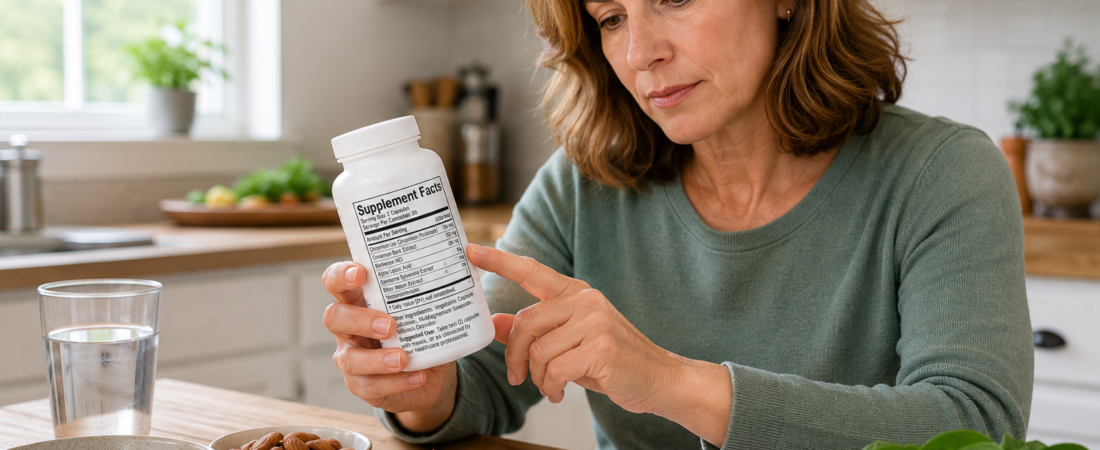
Start With the Supplement Facts Panel
Dietary supplements use a “Supplement Facts” panel. This is different from the “Nutrition Facts” label you see on regular foods.
The Supplement Facts panel should show the serving size and the ingredients included in that serving.
When reading it, ask:
- How many capsules, tablets, drops, or scoops are in one serving?
- How many servings are in the bottle?
- What active ingredients are listed?
- How much of each ingredient is included?
- Are the amounts listed clearly?
- Are any Daily Values shown?
This matters because a bottle may look like it lasts a long time, but the serving size may be two capsules, four capsules, or multiple doses per day.
If the serving size is unclear, the product is harder to judge.
Check the Dosage, Not Just the Ingredient Names
Many supplement buyers look only at the ingredient list.
That is not enough.
An ingredient name tells you what is included. The dosage tells you how much is included.
For example, a supplement may list a popular herb, mineral, or plant extract. But if the amount is too low, unclear, or hidden inside a blend, you may not know what you are actually getting.
When reading a blood sugar supplement label after 40, look for clear numbers.
Ask:
- How many milligrams are included?
- Is the amount shown per serving?
- Is the serving size realistic?
- Is the ingredient standardized?
- Does the label explain the form of the ingredient?
- Is the dosage hidden inside a blend?
Clear dosage information is a trust signal. Hidden dosage information is a reason to slow down.
Be Careful With Proprietary Blends
A proprietary blend is a mixture of ingredients grouped together under one total amount.
For example, the label may show a blend with several ingredients, but only list the total blend amount, not the amount of each ingredient.
This is not automatically bad. Some companies use proprietary blends to protect their formula.
But for the buyer, it creates a problem.
You may not know how much of each ingredient you are taking.
That matters more after 40, especially if you take medication or have a health concern.
Ask:
- Does the label show exact amounts for each ingredient?
- Or does it hide several ingredients inside one blend?
- Are any stimulants included?
- Are there herbs that may interact with medication?
- Is the blend easy to understand?
If a company wants trust, it should make the formula clear.
Look for Other Ingredients
Do not stop at the active ingredients.
Look for the section called “Other Ingredients.”
This may include capsule materials, fillers, flavors, sweeteners, preservatives, colors, or processing ingredients.
Some of these may be normal. But you still want to know what you are taking.
Check for:
- Added sugars
- Artificial colors
- Artificial flavors
- Major allergens
- Gelatin
- Soy
- Gluten
- Unnecessary sweeteners
- Preservatives
For blood sugar support, added sugar or unnecessary sweeteners may be especially worth noticing.
The goal is not to panic over every extra ingredient. The goal is to understand what is in the product before buying it.
Read the Suggested Use Carefully
Suggested use tells you how the company recommends taking the product.
This section may say something like:
- Take one capsule daily
- Take two capsules with a meal
- Take drops before breakfast
- Use once or twice per day
- Do not exceed recommended serving
Read this section slowly.
Ask:
- How many times per day do I need to take it?
- Should it be taken with food?
- Does it say not to exceed the serving?
- Is the routine realistic for me?
- Will one bottle last 30 days?
- Will I need multiple bottles per month?
A supplement may look affordable until you realize the daily serving uses up the bottle quickly.
Check the Warning Section
This is one of the most important parts of the label.
Many people skip warnings because they are printed in small text. Do not skip them.
Warnings may mention:
- Pregnancy or nursing
- Medication use
- Medical conditions
- Age restrictions
- Allergies
- Surgery
- Possible side effects
- Keeping the product away from children
- Talking to a healthcare provider before use
If you are over 40 and take medication for blood sugar, blood pressure, cholesterol, heart health, kidney issues, or another condition, this section matters.
A label that tells you to consult a healthcare professional is not trying to scare you. It is a reminder that supplements can affect people differently.
Notice the Claims on the Bottle
The front of the bottle may use claims like:
- Supports healthy blood sugar
- Supports metabolism
- Supports energy
- Supports glucose metabolism
- Promotes healthy wellness
These are different from disease-treatment claims.
Be careful if a label or sales page says or strongly suggests:
- Cures diabetes
- Reverses diabetes
- Lowers blood sugar instantly
- Works like medication
- Replaces your medication
- Guaranteed results
- No diet or exercise needed
A dietary supplement should not be treated like a prescription drug. If a product makes medical promises that sound too strong, that is a red flag.
The safest approach is to look for careful, realistic language.
Look for Quality Signals
A label may include quality-related phrases such as:
- GMP
- Third-party tested
- Made in an inspected facility
- Quality tested
- Certificate of Analysis available
- Non-GMO
- Gluten-free
These signs do not automatically prove a supplement works. But they may help you judge whether the company is taking quality seriously.
Third-party testing can be especially useful because it means an outside organization has checked certain aspects of the product.
Still, be careful. Some seals can look official without meaning much. If a company uses a quality badge, you can look up what the badge means.
Ask:
- Who tested the product?
- Can I verify the certification?
- Does the company provide details?
- Is there a Certificate of Analysis?
- Is the manufacturer easy to identify?
Quality language should be specific, not vague.
Find the Manufacturer or Distributor Information
A trustworthy label should make it possible to identify the company behind the product.
Look for:
- Company name
- Address
- Website
- Customer support email
- Phone number
- Return or refund information
If there is no clear company information, that is a reason to be careful.
You should know who to contact if you have a question, need a refund, or want more information about the product.
This is especially important with online supplement funnels, where some websites use similar names, lookalike pages, or temporary discount pages.
Compare the Label With the Sales Page
This step is simple but powerful.
Read the label. Then read the sales page.
Do they match?
For example:
- Does the sales page claim more than the label supports?
- Does the label use careful language, while the ad uses extreme promises?
- Does the sales page mention ingredients that are not clear on the label?
- Does the sales page make the product sound like a treatment?
- Does the checkout page reveal subscriptions or extra charges?
If the advertisement sounds much stronger than the label, slow down.
A good product should not need exaggerated claims to sell.
If you want to see these label-reading steps applied to a specific product, read our careful Gluco Shield Pro review. It shows what adults over 40 should check before buying, including ingredients, marketing language, pricing, refund details, and safety notes.
For a deeper ingredient-focused breakdown, you can also read our Gluco Shield Pro Ingredients guide.
Disclosure: Some pages on this website may contain affiliate links. If you buy through links on our site, we may earn a commission at no extra cost to you.
Check the Refund Policy Before Buying
The refund policy may not always be on the bottle, but it should be easy to find before you buy online.
Look for:
- Refund window
- Return instructions
- Customer support contact
- Whether opened bottles can be returned
- Who pays return shipping
- Whether there is an auto-ship or subscription
- How to cancel future orders
Many buyers focus only on the discount price. But the refund policy can matter just as much.
If the refund policy is hard to find, confusing, or hidden until after purchase, be careful.
Think About Medication Safety
This is where adults over 40 need to be extra careful.
If you take medication or have a health condition, do not rely only on the supplement label.
Bring the label or ingredient list to your doctor, pharmacist, or healthcare provider and ask:
- Could this interact with my medication?
- Could any ingredient affect my blood sugar too much?
- Is this safe with my health history?
- Should I avoid any ingredient on this label?
- Do I need to monitor anything more closely?
This is especially important if you have been told to monitor your blood sugar, have a diagnosed medical condition, or take multiple medications.
A supplement should never push you to ignore medical advice.
Watch for Hidden Subscription Traps
Some supplement offers are sold as one-time purchases. Others may include subscriptions, auto-ship programs, or recurring billing.
Before buying, check:
- Is this a one-time purchase?
- Am I being enrolled in a subscription?
- How often will I be charged?
- Can I cancel easily?
- Is there a customer service contact?
- Is the final checkout price clear?
A good buying process should be transparent.
If the checkout page feels confusing, do not rush.
Use a Simple Label Checklist
Before buying any blood sugar supplement after 40, use this checklist:
- The Supplement Facts panel is clear.
- The serving size is easy to understand.
- The ingredient amounts are listed.
- The formula is not hidden entirely inside a proprietary blend.
- The “Other Ingredients” section is clear.
- The suggested use is realistic.
- The warning section is visible.
- The claims are not extreme.
- The company information is easy to find.
- The refund policy is clear.
- There are no hidden subscription surprises.
- You have checked with a healthcare provider if you take medication or have a medical condition.
If a product fails several of these checks, it may be better to wait.
Want a printable version of this checklist? Download the free Blood Sugar Supplement Label Checklist After 40 and keep it nearby before comparing any supplement online.
By downloading the checklist, you may also receive helpful wellness emails from Better Health After 40. You can unsubscribe anytime. This content is educational and not medical advice.
Common Label Red Flags
Be careful if you see:
- No Supplement Facts panel
- No clear dosage
- No company information
- No refund policy
- Extreme claims
- Fake urgency
- Hidden subscription terms
- Claims that sound like medical treatment
- No warning section
- No customer support
A supplement does not have to be perfect. But it should be clear enough for you to make an informed decision.
Want to see how these label-reading steps apply to a real product?
We also created a careful Gluco Shield Pro review for adults over 40. It walks through the product’s marketing language, label details, safety notes, pricing, refund terms, and what to check before buying. Read the Gluco Shield Pro review here.
You May Also Want to Read
- Gluco Shield Pro Review: What Adults Over 40 Should Know Before Buying
- Blood Sugar Supplement After 40: 10 Questions to Ask Before You Buy
- 7 Breakfast Foods for Blood Sugar After 40
- Worst Morning Habits for Blood Sugar After 40
- Why Blood Sugar Spikes in the Morning After 40
Final Thoughts
A blood sugar supplement label after 40 is not just fine print.
It is one of the best tools you have before deciding whether a product deserves your money.
Read the Supplement Facts panel. Check the dosage. Look at the warning section. Notice the claims. Find the company information. Compare the label with the sales page. And if you take medication or have a health condition, ask a healthcare professional before using the product.
The smartest supplement decision is not the fastest one.
It is the one you make after reading the label carefully, understanding the risks, and knowing what questions to ask before you buy.
Sources
- U.S. Food & Drug Administration — Dietary Supplement Labeling Guide
- U.S. Food & Drug Administration — Dietary Supplement Labeling Guide: Supplement Facts
- U.S. Food & Drug Administration — Questions and Answers on Dietary Supplements
- National Institutes of Health — Office of Dietary Supplements Fact Sheets
Federal Trade Commission — Health Products Compliance Guidance