
Why Blood Sugar Spikes in the Morning After 40
Waking up with higher blood sugar can feel confusing.
You went to sleep. You did not eat breakfast yet. You may not have had anything sweet. But when you check your number in the morning, it is higher than expected.
For many adults over 40, this can feel frustrating because it seems like the day is starting off wrong before you have even done anything.
The truth is, morning blood sugar is not only about what you eat for breakfast. It can be affected by sleep, stress, hormones, hydration, late-night eating, coffee habits, dinner timing, and how your body uses insulin.
This is especially important for adults who are trying to make realistic changes without extreme dieting. In places like North Carolina, where busy mornings, sweet coffee, drive-thru breakfasts, family meals, and Southern-style comfort foods are part of real life, the goal is not to shame anyone. The goal is to understand what may be happening and make the next morning a little steadier.
This article explains why blood sugar spikes in the morning after 40, what common habits may contribute to it, and what simple steps may help support a healthier morning routine.
What Is a Morning Blood Sugar Spike?
A morning blood sugar spike means your blood glucose is higher when you wake up or shortly after breakfast.
Some people notice this because they use a glucose meter or continuous glucose monitor. Others may not measure blood sugar but still feel the effects of an unsteady morning.
You may notice:
Low energy after waking
Brain fog
Strong coffee cravings
Hunger soon after breakfast
Mid-morning energy crashes
More sugar cravings later in the day
Feeling “off” even after sleeping
These symptoms can have many causes, so they do not automatically mean your blood sugar is high. But they are signs that your morning routine may be worth paying attention to.
Why Blood Sugar Spikes in the Morning After 40
There is rarely one single reason. Morning blood sugar can be affected by several factors working together.
Here are some of the most common reasons.
1. The Dawn Phenomenon
One major reason for higher morning blood sugar is called the dawn phenomenon.
In the early morning hours, your body naturally releases hormones that help you wake up and prepare for the day. These hormones can signal the liver to release glucose for energy.
For some people, especially those with insulin resistance, prediabetes, or diabetes, this early-morning glucose release may lead to higher blood sugar.
This can feel confusing because it happens before breakfast.
A simple way to think about it:
Your body is preparing fuel for the morning, but your blood sugar response may not be as smooth as it used to be.
What may help:
Keep a more consistent sleep schedule
Avoid very large late-night meals
Limit late-night sweets and refined carbs
Pay attention to morning patterns
Talk with your healthcare provider if morning readings stay high
The key is not to panic over one morning. Look for patterns over time.
2. Poor Sleep
Sleep affects more than energy. It can influence hormones, hunger, cravings, stress, and the way your body handles glucose.
After 40, many adults notice that sleep becomes less consistent. You may wake up during the night, sleep fewer hours, or feel tired even after being in bed long enough.
Poor sleep can make the next morning harder. You may crave stronger coffee, skip breakfast, choose fast food, or reach for something sweet because you feel tired.
A better routine does not need to be complicated.
Try:
Going to bed at a more consistent time
Keeping the room cool and dark
Limiting screens close to bedtime
Avoiding heavy meals right before bed
Creating a calmer evening routine
You do not need perfect sleep. Start by improving one small part of your night.
3. Late-Night Eating
What happens at night can affect the next morning.
A large late dinner, dessert, chips, crackers, alcohol, sweet tea, soda, or a bowl of cereal before bed may make morning blood sugar harder to manage for some people.
This does not mean you can never eat after dinner. But the type and amount of food matter.
Less helpful late-night choices may include:
Cookies
Candy
Ice cream
Chips
Sweet drinks
Large bowls of cereal
White bread or crackers
Alcohol with sugary mixers
Better evening options may include:
Water
Herbal tea
Plain Greek yogurt in a small portion
A small handful of nuts
Cottage cheese
Vegetables with hummus
A simple rule:
If you snack at night, choose protein, fiber, or healthy fat instead of sugar and refined carbohydrates.
4. Dehydration
Many people wake up slightly dehydrated.
If you live in a warmer climate or spend much of the day busy, active, or outdoors, hydration can be easy to overlook. You may wake up tired, foggy, or hungry when your body really needs water first.
Dehydration can also make blood sugar more concentrated.
A simple morning habit:
Drink one glass of water after waking, before coffee.
You can add lemon, cucumber, or mint if plain water feels boring.
This is one of the easiest changes to test because it does not require cooking, shopping, or a complicated diet.
5. Sugary Coffee Drinks
Coffee itself is not always the problem.
The bigger issue is what gets added to it: sugar, flavored syrups, sweet creamers, whipped toppings, and large blended drinks.
For many adults, the morning coffee habit is really a sweet drink habit. If you drink it on an empty stomach, you may feel quick energy at first and then hunger, cravings, or a crash later.
Better choices:
Plain coffee
Americano
Coffee with a small amount of milk
Unsweetened iced coffee
Coffee with cinnamon
Coffee with less sweetener than usual
You do not have to go from very sweet coffee to black coffee overnight. Reducing sugar gradually is more realistic.
For example:
Week 1: Use a little less sweetener
Week 2: Switch to a less sweet creamer
Week 3: Try cinnamon or milk instead of syrup
Small changes are easier to keep.
6. Skipping Breakfast
Some adults skip breakfast because they are busy, not hungry, or trying to eat less.
For some people, this may work. But for others, skipping breakfast can lead to stronger cravings later, bigger portions at lunch, and more refined carbs during the day.
A balanced breakfast does not need to be large.
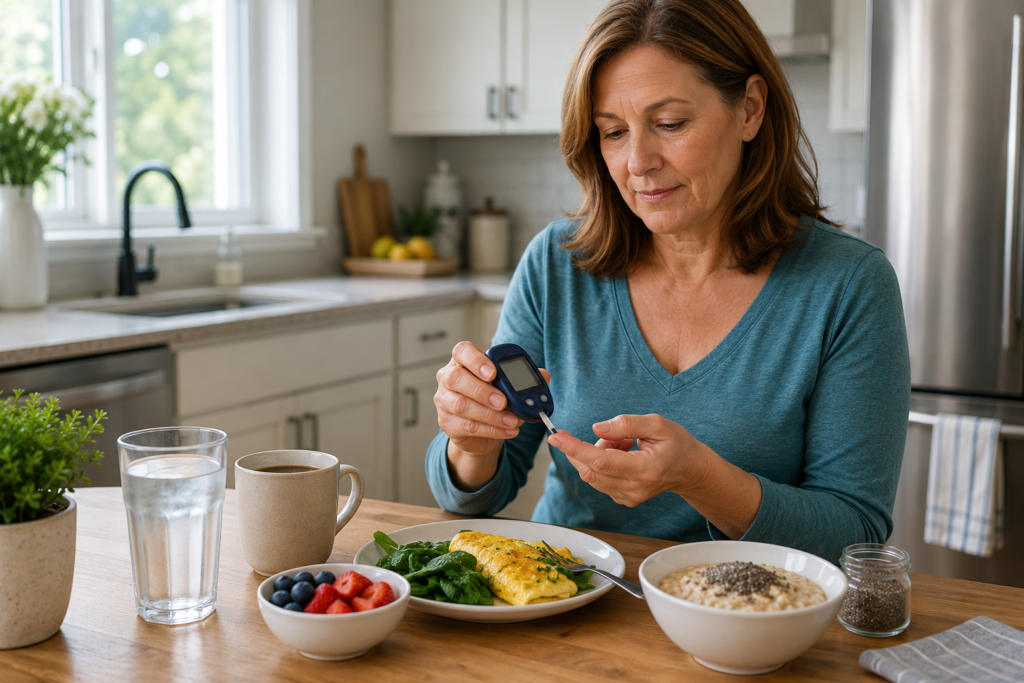
Simple breakfast ideas:
Eggs with spinach
Plain Greek yogurt with berries
Oatmeal with chia seeds and walnuts
Avocado with eggs
Chia pudding with berries
Cottage cheese with cinnamon and berries
The goal is not to force yourself to eat a huge breakfast. The goal is to avoid starting the day with only caffeine, stress, and no real nourishment.
7. Eating Refined Carbs Alone at Breakfast
A breakfast made mostly from refined carbohydrates can be a problem for many adults after 40.
Common examples include:
White toast with jam
Bagels
Muffins
Pastries
Sugary cereal
Pancakes with syrup
Fruit juice
Sweetened yogurt
Biscuits without protein or fiber
These foods can be easy, familiar, and comforting. The issue is not that you are a bad person for eating them. The issue is that when breakfast is mostly refined carbs and sugar, it may not keep you satisfied for long.
A better breakfast formula:
Protein + fiber + healthy fat + slow-digesting carbohydrate
Examples:
Eggs + vegetables + avocado
Greek yogurt + chia seeds + berries
Oatmeal + walnuts + cinnamon
Whole-grain toast + eggs
Cottage cheese + berries + nuts
A smaller biscuit + eggs + vegetables
That last example matters. Healthier eating does not always mean giving up every food you enjoy. Sometimes it means changing the balance on the plate.
8. Morning Stress
Stress can affect your body before you even eat.
Many people wake up and immediately check messages, bills, news, work problems, or family responsibilities. That can put the body in stress mode before breakfast.
Stress does not just affect mood. It can influence hormones, cravings, appetite, and energy.
A calmer morning does not need to take an hour.
Try:
Drink water first
Wait 10 minutes before checking your phone
Take five slow breaths
Step outside for morning light
Prepare breakfast before opening email
Take a short walk if possible
The goal is not a perfect wellness routine. The goal is to stop starting every morning in emergency mode.
9. Sitting All Morning
Movement helps your body use energy.
Many adults eat breakfast, sit in the car, sit at a desk, and stay seated for hours. That can make it harder to feel steady and energized.
You do not need an intense workout to start.
Simple movement options:
Walk for 5 to 10 minutes after breakfast
Do light housework
Stretch
Take the stairs
Walk while taking a phone call
Do a few gentle bodyweight movements
A short walk after breakfast may be more realistic than a full gym routine. It is simple, free, and easier to repeat.
10. Trying to Fix Everything at Once
Morning blood sugar is usually not about one food, one drink, or one supplement.
It is often the result of several small habits:
Sleep
Stress
Hydration
Dinner timing
Breakfast quality
Coffee choices
Movement
Fiber intake
Protein intake
That may sound overwhelming, but it is actually good news. It means there are several small places to improve.
You do not need to change everything in one day.
Start with one habit:
Drink water before coffee
Eat protein at breakfast
Stop drinking fruit juice
Walk 5 minutes after breakfast
Reduce sugar in coffee
Avoid late-night sweets
Add chia seeds or berries to breakfast
Small habits are easier to repeat. Repeated habits are what change routines.
A Simple Morning Plan for Blood Sugar Support After 40
Here is a realistic morning plan you can test for one week.
Step 1:
Drink water after waking.
Step 2:
Eat a breakfast with protein.
Step 3:
Add fiber from berries, oats, chia seeds, vegetables, or avocado.
Step 4:
Keep coffee lower in sugar.
Step 5:
Move gently for 5 to 10 minutes after eating.
Example morning:
Water
Eggs with spinach and avocado
Plain coffee
Short walk after breakfast
Another example:
Water
Greek yogurt with chia seeds and berries
Unsweetened tea
Light stretching or walking
Another realistic Southern-style example:
Water
Eggs with a smaller biscuit
A side of berries or vegetables
Coffee with less sugar
A short walk after eating
This is not a strict diet. It is a steadier routine.
Quick Checklist: Morning Blood Sugar Support
Use this checklist to review your morning habits:
Did I drink water before coffee?
Did I get protein at breakfast?
Did I add fiber?
Did I avoid sugary drinks?
Did I avoid fruit juice?
Did I reduce refined carbs?
Did I move after eating?
Did I sleep enough?
Did I avoid late-night sugar?
Did I manage morning stress?
You do not need every box checked every day. Start with two or three.
Foods and Drinks That May Help
Good morning choices often include:
Eggs
Plain Greek yogurt
Cottage cheese
Oatmeal
Chia seeds
Berries
Avocado
Leafy greens
Nuts
Unsweetened tea
Water
Sparkling water without sugar
Less helpful choices may include:
Sweet coffee drinks
Fruit juice
Sugary cereal
Pastries
White toast with jam
Large muffins
Candy-like granola bars
Sweetened yogurt
Large refined-carb breakfasts without protein
The difference is not about perfection. It is about building breakfasts and drinks that digest more slowly and keep you satisfied longer.
When to Talk With a Healthcare Professional
You should talk with a qualified healthcare professional if:
Your morning blood sugar readings are often high
You have diabetes or prediabetes
You take medication that affects blood sugar
You are unsure how to interpret your numbers
You are considering major diet, supplement, or medication changes
Morning blood sugar can be affected by many factors, including medication timing and medical history. It is better to get personal advice than to guess.
You may also like:
Worst Morning Habits for Blood Sugar After 40
7 Breakfast Foods for Blood Sugar After 40
Best Drinks for Blood Sugar Support After 40
7 High-Fiber Foods for Blood Sugar Support After 40
Best Snacks for Blood Sugar Support After 40
10 Foods That May Help Support Healthy Blood Sugar Naturally After 40
FAQ
Why is my blood sugar higher in the morning if I did not eat?
Morning blood sugar can rise because of natural hormone changes in the early morning. This is often called the dawn phenomenon. It may be more noticeable in people with insulin resistance, prediabetes, or diabetes.
Can coffee raise morning blood sugar?
Plain coffee affects people differently. For many people, the bigger issue is sweetened coffee drinks with sugar, flavored syrups, sweet creamers, or whipped toppings.
Is skipping breakfast bad for blood sugar?
It depends on the person. Some people do fine without breakfast, while others feel stronger cravings, hunger, and energy crashes later. If skipping breakfast leads to overeating refined carbs later, a balanced breakfast may help.
What is a good breakfast for blood sugar support after 40?
A good formula is protein, fiber, healthy fat, and a slow-digesting carbohydrate. Examples include eggs with vegetables, Greek yogurt with chia seeds and berries, oatmeal with walnuts and cinnamon, or cottage cheese with berries.
Should I worry about one high morning reading?
One high reading does not always mean something serious. Patterns matter more. If morning readings stay high or you have diabetes, prediabetes, symptoms, or medication questions, talk with a healthcare professional.
If you are comparing supplements, it may help to understand how to read a blood sugar supplement label after 40 before buying.
Final Thoughts
Morning blood sugar can feel frustrating because it may rise before you have done anything.
But after 40, your morning numbers and morning energy are often connected to the full routine: sleep, stress, hydration, dinner timing, breakfast quality, coffee choices, and movement.
Do not try to fix everything in one day.
Start small.
Drink water first.
Add protein to breakfast.
Choose whole fruit instead of juice.
Cut back on sweet coffee.
Walk for a few minutes after eating.
A steadier morning is built through small choices that are realistic enough to repeat.
Medical Disclaimer: This article is for educational and informational purposes only and is not medical advice. It is not intended to diagnose, treat, cure, or prevent any disease. Always consult a qualified healthcare professional before making changes to your diet, medication, supplements, exercise routine, or health plan.