
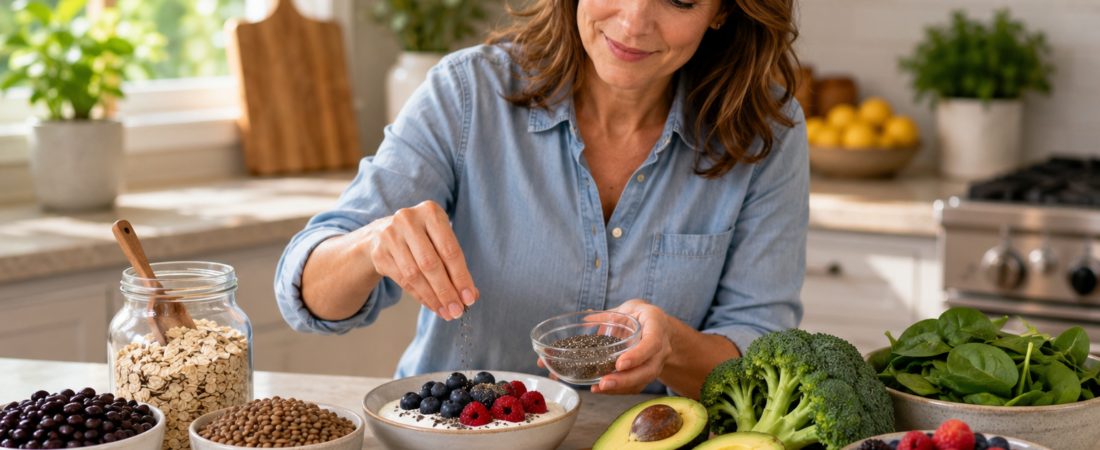
7 High-Fiber Foods for Blood Sugar Support After 40
After 40, many people start paying closer attention to energy, cravings, weight, and blood sugar.
But one simple nutrient often gets overlooked: fiber.
These high-fiber foods for blood sugar support after 40 are simple, affordable, and easy to add to everyday meals.
Fiber is not a trendy supplement or a complicated diet rule. It is found naturally in plant foods like beans, oats, berries, seeds, vegetables, and lentils. It helps meals feel more satisfying and can support steadier energy when included as part of a balanced lifestyle.
These high fiber foods for blood sugar support after 40 are simple, affordable, and easy to add to everyday meals.
The goal is not to eat perfectly. The goal is to build meals that digest more slowly, keep you full longer, and help you avoid the quick sugar crashes that often come from refined carbohydrates and sugary snacks.
Below are seven high-fiber foods worth adding to your routine.
- Beans
Beans are one of the most practical high-fiber foods for adults over 40.
They contain both fiber and plant-based protein, which makes them more filling than many refined carbohydrates. This combination can help support steadier energy and reduce the urge to snack soon after eating.
Good options include:
Black beans
Kidney beans
Pinto beans
Chickpeas
White beans
Beans are also inexpensive and easy to use in soups, salads, bowls, and side dishes.
Simple way to use them:
Add half a cup of beans to a salad with leafy greens, avocado, and grilled chicken or fish.
Mistake to avoid:
Do not turn beans into a large meal by themselves if you are watching carbohydrates. Pair them with vegetables and protein for better balance.
- Lentils
Lentils are another fiber-rich food that fits well into blood sugar-friendly meals.
They are smaller than beans, cook faster, and work well in soups, stews, salads, and bowls. Lentils provide fiber, plant-based protein, and slow-digesting carbohydrates.
For adults over 40 who want filling meals without relying on white bread, white rice, or pasta, lentils can be a smart choice.
Good options include:
Brown lentils
Green lentils
Red lentils
Black lentils
Simple way to use them:
Make a lentil soup with vegetables, olive oil, herbs, and a lean protein on the side.
Mistake to avoid:
Watch portions if you are combining lentils with other carbohydrate foods like rice, bread, or potatoes.
- Oats
Oats are one of the most familiar high-fiber breakfast foods.
They contain soluble fiber, especially beta-glucan. Soluble fiber forms a gel-like texture during digestion, which may help slow how quickly food moves through the digestive system.
That is one reason oatmeal can feel more satisfying than sugary cereal or white toast.
The best choices are:
Rolled oats
Steel-cut oats
Plain oats
Try to avoid instant flavored oatmeal packets because they often contain added sugar.
Simple way to use them:
Cook oats with cinnamon, chia seeds, walnuts, and a small handful of berries.
Mistake to avoid:
Do not load oatmeal with brown sugar, honey, syrup, or sweetened dried fruit. Those additions can turn a healthy breakfast into a high-sugar meal.
- Chia Seeds
Chia seeds are small, but they are packed with fiber.
When chia seeds absorb liquid, they expand and form a thick, gel-like texture. This can help make meals feel more filling.
Chia seeds are also easy to add to breakfast without changing the flavor too much.
Simple ways to use them:
Add chia seeds to plain Greek yogurt
Mix them into oatmeal
Make chia pudding with unsweetened almond milk
Add them to a protein smoothie
Sprinkle them over berries
Simple chia pudding:
Chia seeds + unsweetened almond milk + cinnamon + berries.
Mistake to avoid:
Do not use sweetened milk or add too much honey or syrup. Keep the base unsweetened.
- Berries
Berries are a smart fruit choice because they offer natural sweetness along with fiber.
Compared with many fruit juices or tropical fruits, berries are easier to fit into a blood sugar-conscious routine. They also add flavor to meals without needing added sugar.
Good options include:
Blueberries
Strawberries
Raspberries
Blackberries
Berries work especially well with protein-rich foods like Greek yogurt or fiber-rich foods like oats and chia seeds.
Simple way to use them:
Add a small handful of berries to plain Greek yogurt with chia seeds and walnuts.
Mistake to avoid:
Do not replace whole berries with fruit juice. Whole fruit keeps the fiber. Juice is much easier to drink quickly and may affect blood sugar faster.
- Avocado
Avocado is rich in fiber and healthy fats.
It does not taste sweet, but it can make meals feel more satisfying. That matters because many people over 40 struggle with cravings between meals.
Avocado works well with eggs, salads, beans, vegetables, and whole-grain toast in moderate portions.
Simple ways to use it:
Add avocado to eggs
Use avocado in a salad
Add avocado to a bean bowl
Spread avocado on one slice of whole-grain toast
Mistake to avoid:
Do not pair avocado with too much white bread or large portions of chips. The avocado is not the problem; the refined carbs around it often are.
- Non-Starchy Vegetables
Non-starchy vegetables are some of the best foods to eat more often after 40.
They are usually low in calories, rich in fiber, and full of vitamins, minerals, and plant compounds. They also add volume to meals, which can help you feel full without relying on large portions of refined carbohydrates.
Good options include:
Broccoli
Spinach
Kale
Cauliflower
Zucchini
Cabbage
Bell peppers
Green beans
Mushrooms
Romaine lettuce
Simple way to use them:
Fill half your plate with non-starchy vegetables at lunch or dinner.
Mistake to avoid:
Do not cover vegetables with heavy sauces, sugar-based dressings, or large amounts of fried toppings. Keep preparation simple.
How to Build a High-Fiber Plate After 40
A high-fiber meal does not need to be complicated.
Use this simple formula:
Half your plate:
Non-starchy vegetables
One quarter:
Protein
One quarter:
High-fiber carbohydrate
Add:
Healthy fat in a small amount
Examples:
Salmon + broccoli + lentils + olive oil
Eggs + spinach + avocado + berries
Greek yogurt + chia seeds + berries + walnuts
Chicken salad + beans + leafy greens + avocado
Oatmeal + chia seeds + berries + nuts
This formula helps you avoid meals built mostly around white bread, white rice, pasta, pastries, or sugary drinks.
Common Low-Fiber Foods to Limit
Many common foods are low in fiber and easy to overeat.
You do not have to avoid them forever, but they should not be the center of your daily routine.
Foods to limit include:
White bread
Sugary cereal
Pastries
Candy
Fruit juice
Regular soda
White rice in large portions
Sweet coffee drinks
Chips
Cookies
Instant flavored oatmeal
If you eat these foods, try to pair them with protein, fiber, or healthy fats instead of eating them alone.
How to Add More Fiber Without Feeling Overwhelmed
A big mistake is trying to change everything overnight.
If you suddenly add too much fiber, you may feel bloated or uncomfortable. A better approach is to increase fiber slowly and drink enough water.
Start with one small change:
Add chia seeds to yogurt
Add berries to breakfast
Replace white toast with oats
Add beans to salad
Eat vegetables before the main meal
Add lentils to soup
Choose whole fruit instead of juice
Small steps are easier to repeat, and repeated habits create results over time.
You may also like:
10 Foods That May Help Support Healthy Blood Sugar Naturally After 40
Best Drinks for Blood Sugar Support After 40
Worst Morning Habits for Blood Sugar After 40
Food habits should come first, but if you are considering a supplement, learn how to read a blood sugar supplement label after 40 before spending money.
Final Thoughts
After 40, healthy blood sugar support is often built from simple, repeatable choices.
Fiber is one of those choices.
Choosing high fiber foods for blood sugar support after 40 can be one simple way to build meals that feel more satisfying and balanced.
It helps make meals more filling, supports digestion, and can help you build a more balanced way of eating. You do not need a perfect diet. You need more real foods that work with your body.
Start with one high-fiber food this week.
Add beans to one meal.
Try oats for breakfast.
Add chia seeds to yogurt.
Choose berries instead of juice.
Fill half your plate with vegetables.
One small change repeated often can become the foundation of a healthier routine.
Medical Disclaimer: This article is for educational and informational purposes only and is not medical advice. It is not intended to diagnose, treat, cure, or prevent any disease. Always consult a qualified healthcare professional before making changes to your diet, medication, supplements, exercise routine, or health plan.